,

Emil Bock

Emil Bock

–From  “Die Gründer Der Christengemeinschaft: Ein Schicksalsnetz” by Rudolf F. Gaedeke, translation by Gail Ritscher

19 May 1895 in Barmen/Wuppertal — 6 December 1959 in Stuttgart

Emil Bock’s death on 6 December 1959, the second Sunday of Advent, marked the close of a third grand era in the founding of the Christian Community. The first era consisted of the actual founding events with Rudolf Steiner from 1920-25; the second lasted until 1938 under the leadership of Friedrich Rittelmeyer; the third encompassed the 21 years of the ban, Emil Bock’s arrest by the Nazis, and the resumption of the Christian Community’s work under the leadership of Emil Bock as Erzoberlenker.

With Emil Bock, a man whom Rudolf Steiner once described as having a “will of iron” crossed the threshold of death. In the spring of 1921, having learned from Gertrud Spörri about the first questions to Rudolf Steiner and his responses, Bock stepped forward with his iron will to lead the group of potential founders and to work toward a theology and study of the gospels that was based in anthroposophy.

What the Christian Community owes Emil Bock, above and beyond the tangible wealth of his written works, is beyond accurate measure. Could Friedrich Rittelmeyer, after being deserted in the work by Christian Geyer, have taken up his tasks without the rock-solid support of Emil Bock, 23 years his junior? During the intense events of the founding, the purposeful Emil Bock mediated between talkers and doers, “old” and young, long-time anthroposophists and newcomers to the scene. In addition, he persistently asked the necessary questions based on an unerring sense for both the practical and the spiritual.

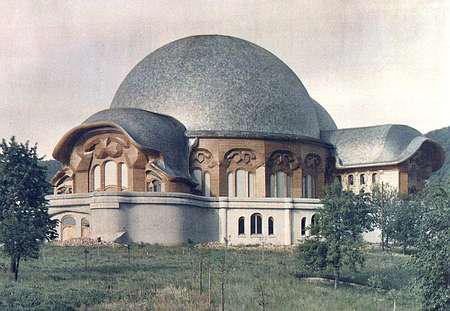
Second only to his truly special relationship to architecture, Emil Bock focused most of his considerable energy on creating the social structure of the priest circle and the congregations, working under the hands-off leadership of Rudolf Steiner.

The 27-year-old was comfortable working with both the written and spoken word. In addition to Friedrich Rittelmeyer, Bock also spoke before just as large an audience as Rudolf Steiner in the Gustav-Sigle House in Stuttgart. Anyone who ever attended one of his lectures found his presentation style hard to forget, and his books all have the confident, convincing, vivid style that makes the most difficult content easy to grasp.

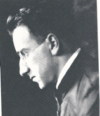
Emil Bock exuded a confidence that inspired trust. With his powerful build, round head, lively blue eyes, firm friendly handshake, and open smile, you could not help but want to support him. He had many friends, some of whom felt inwardly carried by him, while others found him a bit too “intense.” The latter, however, failed to see the tender side of his nature, which usually seemed peacefully melancholic—until it flared up ready to do battle!

Not only the Christian Community lamented the death of one of its most outstanding pioneers. That second Sunday in Advent, 1959, the entire anthroposophical movement lost one of Rudolf Steiner’s most important and influential students. Bock’s life unfolded it such harmonious segments that it is tempting to think of it as having a canonical composition: 21 years as erzoberlenker, preceded by 21 years meeting and working with anthroposophy (as of 1916), preceded by 19 years of childhood and youth, and culminating in his near-death experience during WWI and his subsequent period of recovery and completing his military service.

Emil Bock was born on Sunday, 19 May 1895, in Barmen, which today is part of Wuppertal. His parents were simple folk, his father working in a warehouse. There was a brother 8 years his senior, but Emil had no particular relationship with him. Life was very simple. The family lived in three rooms in a house on a back street. The days were marked by the difficult working conditions that affected the souls and health of his parents. The serious, quiet little boy had no toys, and eventually he had to earn money for the family by tutoring, particularly after the death of his father when Emil was 16 (1911). A gifted student, Emil was able to attend school (Realgymnasium) with the support of his father’s Jewish boss, Ernst Wahl. He subsequently received an education not only in the humanities, but also in the natural sciences, for which he was very grateful. In the 1959/60 issue of “Die Christengemeinschaft,” Bock himself described the sadness and yearning of his childhood and youth and his intimate shy relationship to Grete Seumer, who later became his wife.

Early on, Bock showed a special interest in myths and history, for human beings and their destinies.

When an excursion to Cologne was planned in one of the upper grades, Emil Bock gave a presentation on Romanesque architecture. In addition to the famous gothic cathedral in Cologne, the city, with its 12 Romanesque churches, still provides a grand overview of the golden age of this harmonious, Christian architecture, even after the destruction and reconstruction caused by the war.

Bock completed his Abitur (comparable to the International Baccalaureate) in the spring of 1914 and—again with the support of Ernst Wahl—immediately began his teacher training in Bonn, majoring in Germanics and new languages (English, French).

The end of the semester coincided with the beginning of WWI, and Bock volunteered for military service. Although his presentation on Romanesque architecture and his tour guide services through the churches of St. Gereon and St. Aposteln in Cologne may have been a deliberate attempt to overcome his shyness, he must also have been very confident inwardly. Sent to the front with minimum training on 10 October 1914, he was convinced that nothing could happen to him.

After three weeks at the Front in Flanders, he was hit by a ricochet bullet on 31 October 1914. It left him lying in a trench between the two fronts, a fist-sized hole in his back, half submerged in water, for 30 hours. He was taken for dead, and had he been transported at that point, he would have bled out en route. He hung on, constantly fighting to remain conscious, as though floating above his wounded body. Having decided to live, he summoned all his willpower and called out loudly to attract the attention of the corpsmen, who were once again combing the field of slaughter “below him” for the wounded. What they heard was a weak groaning, and they carried him away. He recovered slowly, first in Bonn, then in Berlin, where he had to complete his military service as an inspector of international mail. A large amount of printed material being mailed to Switzerland and authored by “Rudolf Steiner” thus fell into his hands, and he took these materials back to his quarters overnight in order to peruse them (1915).

Bock’s parents had not been churchgoers, though his father had sent him to Sunday School at the Reformed Church. He had been impressed by “Old Krauss,” an original lay member of the especially pious Wuppertal circles. A boy invited him to the Bibel-Kränzchen (Bible study group) where he met idealistic young people, many of whom later died in the war. In the summer of 1914, in Bonn, he was drawn into the Theological Student Association by some classmates. These were young Emil Bock’s connections with “theology.”

Because the barracks in Rheinland were packed full when the war started, Emil Bock had enlisted in the military in Berlin, where they needed “tall chaps.” He was accepted and sent to the Front. The dreamer that he was, despite all his alertness, was now jolted fully awake. After his experience of floating above his body, as though beyond the threshold of death, he lived in acute awareness of it, almost as though it did not belong to him.

After a 6-month hospital stay in Bonn, he was discharged in Berlin over Easter 1915. He learned Greek and Latin, at first just to remind himself how to study. In June, just a few months after starting to learn Hebrew, he passed the Hebrew exam. In the summer, after being granted permission to work part-time, he slowly resumed the studies he had started. He gave a lecture on Novalis and considered writing his doctoral thesis on Christianity and Novalis. As a Germanist, he also joined the Theological Student Association in Berlin, where he heard all the famous professors: Dessoir, Deissmann, Troeltsch, Beckh, Harnack.

It was 20 August 1916, a Sunday in summer, when Emil Bock made his most significant encounter at the age of 21. He was working for the Tegel Translation Service and had an early morning assignment at a prisoner-of-war camp. Afterwards, as he wandered toward the center of town without any particular goal, he noticed and decided to tag along with a growing stream of people moving toward the New Church on the Gendarmenmarkt. It was Friedrich Rittelmeyer’s inaugural sermon on a theme from the Gospel of John (John 17:4): “…the bright clarity of a life filled with broad knowledge and understanding spread out around him. Knowing and believing were one. Clearly formulated statements about Christ and the spiritual world lent concrete weight to certain ideological perspectives.” Soon after, the two men met one another in person.

To begin with, Friedrich Rittelmeyer brought Emil Bock together with Eberhard Kurras and spoke to them cautiously about anthroposophy. Both of them had been hearing Rudolf Steiner’s public lectures since spring 1917; later, Rittelmeyer took them along to two lectures at the anthroposophical branch on Gaisbergstrasse, where they were then also personally introduced to Rudolf Steiner. These were the two big lectures on Luther that Rudolf Steiner gave on September 11 and 18 for the 400-year celebration of the Reformation (today in GA 176: “The Karma of Materialism”).

Emil Bock now began to study anthroposophy, along with everything else, although he still was not clear on his career goal. It was only after the war, in November 1918, that he enrolled in the theology department. He soon won a competition with a paper on Schleiermacher’s[1] religious thinking and received the Schleiermacher plaque. He was awarded another prize for a paper on Schleiermacher’s concept of the church, and he won first place a third time for a paper on Schleiermacher’s historic way of thinking in a Schleiermacher Society competition. Needless to say, he was never obliged to take a written exam later.

Bock worked for a while as a youth counselor in the “Youth Club.” He became the founder and leader of a theological study group. Eventually, he became a vicar and substitute preacher, and before long he became intimately acquainted with Berlin’s churches and congregations—as well as with the misery of working as a pastor. At that time, anyone obliged to provide religious instruction to the children of 80 workers could expect some rough patches, and anyone obliged to adhere to strict liturgical forms must have yearned for rituals that contained more life.

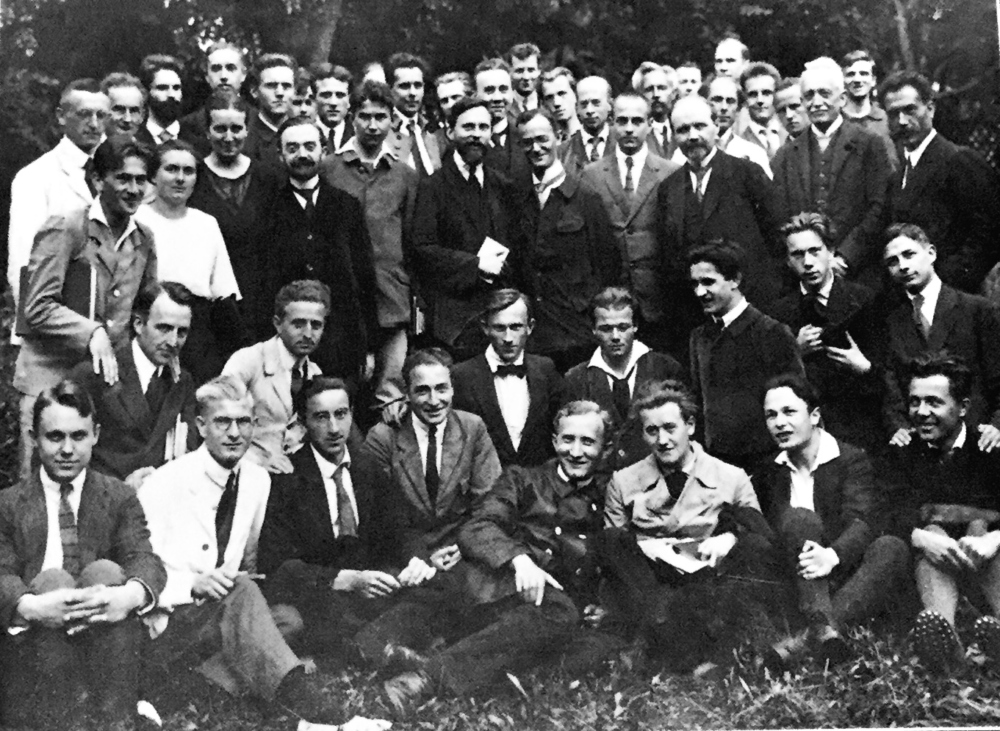
The work with Friedrich Rittelmeyer was intense in that theology student group, which Emil Bock, Eberhard Kurras, Adolf Müller, Richard Gitzke, and others nurtured for years. Bock wondered whether he should apply for the position of second pastor at the New Church. While he consciously refrained from openly supporting anthroposophy, he also became increasingly more involved in it, becoming one of its most profound experts. That being said, he, too, failed to ask Rudolf Steiner the necessary question for launching the actual work of renewing religion through anthroposophy.

The decisive moment only came for Emil Bock when Gertrud Spörri told him at the beginning of the summer semester, so late April/early May 1921, what she, Johannes Werner Klein, and Hermann Heisler had asked Rudolf Steiner. From that moment on, he was the driving force of the movement, along with Gertrud Spörri, and remained in constant touch with Friedrich Rittelmeyer. It was on his instruction that Gertrud Spörri went to Stuttgart, resulting in the historic written request to Steiner and his promise to hold the “June Course” as an introduction to the actual teaching course of the priest candidates at the Goetheanum in Dornach in September and October 1921 (“Autumn Course”). Organizing the “June Course” in Stuttgart for 18 students presented no particular difficulties. Gertrud Spörri procured what was necessary. Emil Bock promptly delayed his big final exam in order to participate in the “June Course.” Gertrud Spörri organized all aspects of the “Autumn Course” for nearly 120 participants, including obtaining the necessary financial backing.

In January 1922, a Swedish engineer donated 100,000 Swedish Krona to the cause—worth millions in Germany at that time. Although three quarters of the money soon had to be returned, Bock was able to use part of it to buy a piece of land in Stuttgart on Urachstrasse and build “Urachhaus” there. He traveled back and forth from Stuttgart to Berlin several times a month for quite a while, as he and Rittelmeyer had decided to follow Steiner’s advice to eventually move the “central office” of the movement from Berlin to Stuttgart in order to be closer to Steiner and the anthroposophical work.

In addition to all this activity, Emil Bock passed his licentiate[2] exam during this time (March 1922), while Gertrud Spörri spent the winter months caring for her father in Switzerland until his death. It thus turned out that neither of them from the “central office” in Berlin had the time to give adequate attention to the future founder circle by acting as the focal point and by initiating activities. Rudolf Steiner therefore advised sending out a memorandum to bring together those truly committed to the founding, which ultimately took place in Berlin in March. Once again, there was a need for mediation, this time not between talkers and doers, like during the “Autumn Course,” but between those who felt more time was needed to prepare properly before moving forward, like Rittelmeyer, and those who felt there was no time to lose.

This dramatic back and forth eventually resulted in the real, practical work of the founding. Congregations were formed, financial calculations were made to the extent possible, and other issues were dealt with in order to realize the intention behind the planned gathering in Breitbrunn and the founding events, namely, the inauguration of a new Christian church.

Leadership rested in the hands of Friedrich Rittelmeyer, Christian Geyer, and Emil Bock. They met for talks on the von Keyserlingk family estate in Koberwitz, after which they all traveled to Dornach for eight extensive conversations with Rudolf Steiner. This also provided them with the opportunity to participate in the “National Economic Course” and ultimately to meet the circle in Breitbrunn. It was during this time that Christian Geyer withdrew, dealing a heavy blow not only to Friedrich Rittelmeyer, but also to the entire founder circle, which now felt the weight of an added responsibility to which Rudolf Steiner made pointed reference on the very first day in Dornach.

Finally, the time was at hand. The hierarchy of the priest circle was established based on Rudolf Steiner’s advice; Emil Bock was granted the status of oberlenker on 10 September prior to being the first one ordained as a priest by Friedrich Rittelmeyer on the 16th. He then performed ordinations himself for some of the founder circle.

His own report about the founding events appear in the anthology “We Experienced Rudolf Steiner” (Stuttgart 1977).

Emil Bock worked tirelessly for the Christian Community after the founding in Dornach. He now lived in Stuttgart, where he gave public lectures to audiences of over 1,000 in hopes of attracting attention to the new movement. Small circles of interested people received further preparation and were accepted as the first congregation members. Small groups had already experienced the Act of Consecration at separate times before they all experienced it together on the first Sunday of Advent, 1922, in a rented room belonging to the Schiedmayer piano company.

Emil Bock began his priestly work by forming the first member groups within the Stuttgart congregation. His activities as lenker and oberlenker began at the same time. Rudolf Steiner’s advice to him emphasized the importance of helping pastors who often worked solo. Emil Bock helped them not only on a personal level, but also by holding public lectures in their cities and participating in congregational functions, the way Friedrich Rittelmeyer and others were doing. He was, of course, a main speaker at all the many conferences in the early years—up to seven in a single year—in the various cities and towns.

In addition, he began to prepare a seminary training for priests right away with Friedrich Rittelmeyer and Hermann Beckh. He served as seminary director for 10 years and remained one of the seminary’s most important lecturers until his death. Then there was his written work. He was one of the most prolific authors, starting with his articles in the periodical “Die Drei” in 1921, then in “Tatchristentum” in 1922, then in Die Christengemeinschaft,” which he published after Friedrich Rittelmeyer, from 1938 to 1959. Furthermore, his written work appeared nearly monthly in the internal “Rundbrief” circulated to all priests. He was also an inexhaustible letter writer and dictator, as beautifully evidenced by a volume of his collected letters. And—not least—he authored a long list of books that can justifiably be called the standard-bearers for the first decades of Christian Community work: In pride of place, the series “Spiritual History of Humanity” that he began in 1934, a first great attempt to view the contents of the Bible through the lens of anthroposophy and introduce a universal viewpoint of the human being accessible to modern thinking. The spiritual importance of this work on, for example, the meaning of Judaism in the years of aggressive anti-Semitism cannot be overstated.

Other works, such as “Boten des Geistes” (Messengers of the Spirit) or “Wiederholte Erdenleben” (Repeated Earthly Life), belong to the spiritual history of mankind in a broader sense, as do “Die Zeitalter der Romanischen Baukunst” (The Age of Romanesque Architecture), and “Schwäbische Romanik” (Schwabian Romanesque Art), or “Zeitgenossen, Weggenossen, Wegbereiter” (Contemporaries, Traveling Companions, Path Blazers). Naming all the books here, let alone placing a value on them, is impossible. Just two additional works need be mentioned: First, “The Life and Times of Rudolf Steiner,” which mark Bock as one of the most accomplished experts on anthroposophy. This is especially remarkable given that the collected works of Rudolf Steiner were not at his disposal nor, to a large extent, even public. He had gathered a mountain of historical facts about the course of Rudolf Steiner’s life, one of which was the identification of the “herb gatherer” as Felix Koguzki, whom Steiner had encountered as a student. This identification was made possible with the help of Stuttgart congregation member Margarete Georgii and was based on a hint from Erich Gabert. Anyone privileged enough to hear even one of Emil Bock’s later lectures, which culminated in the book “The Life and Times of Rudolf Steiner,” could only marvel at his masterful way of presenting biographic and historical themes.

The second book that comes to mind—and this links the end of Bock’s written work with its beginning—is his effort around the German linguistic form of the New Testament, particularly the Gospels. From the time the Christian Community was founded, Emil Bock worked toward a modern and spiritually appropriate translation of the gospel. He aspired in particular to follow Rudolf Steiner’s advice that the translation fully express the original meaning. Starting in September 1927—the exact middle point of his life—until 1930, Emil Bock issued steady installments from this work, which he called “contributions to understanding the Gospel.” His process was to look into the composition of this “divine masterpiece,” its meaning, and what it contained in terms of imagination and inspiration. It was only after this preparatory work that he published “contributions to the translation of the New Testament” in manuscript form.

Bock never considered his translation as final. While at the seminary, I personal heard Emil Bock saying in his quiet humorous way during a course on Paul’s letter to the Romans, “I have brought you a translation of this section we are discussing, it is something like my twenty-fifth, but it is also rubbish.” It therefore became a question of whether and in what form these translations should be published. Given the author’s reservations and intentions, we must be grateful that the extensive volume “The Gospel” and the printed translation “The New Testament” exist today, even if they have subsequently been revised by others.

We have thus far been considering Emil Bock as speaker and writer. Let us now go back to the days of the founding and follow additional steps in his biography from there.

On 13 November 1922, while on a lecture tour, Emil Bock and Grete Seumer had married in Wuppertal. Four children came out of this marriage—the eldest named by Rudolf Steiner. The children rarely saw their father, who traveled constantly, so even when he was at home, Bock felt more like a stranger to them.

Of course, Emil Bock tried to learn as much as possible from Rudolf Steiner through his lectures and in discussions about the movement. He therefore participated not only in further meetings of the priest circle in 1923 and 1924, but also in the “Course for Young Doctors,” the “Curative Education Course,” and the “Tone Eurythmy Course.” Unsurprisingly, he became a member of the School for Spiritual Science, taking part in the First Class lesson on 15 February in Dornach. This was not for his personal edification, but because he was convinced that at least the leaders of the Christian Community also needed to be broadly educated in anthroposophy. Friedrich Rittelmeyer, meanwhile, after his first experiences as oberlenker with the destinies of priests, found it necessary to ask for and follow Rudolf Steiner’s advice: For the work to continue, the priest hierarchy needed one person at the center with full responsibility and authority. Thus, a few weeks before Rudolf Steiner’s death, the office of erzoberlenker was formally instituted on 24 February in Berlin; after that, Friedrich Rittelmeyer named his successor—Emil Bock—and shortly after that, both men stood at the death bed of their master.

In addition to all his obligations as pastor, lenker—in the 1930s, his lenker region sometimes stretched from Cologne to Königsberg (about 250 miles)—oberlenker, seminary teacher, lecturer, and writer, Emil Bock always found a few weeks in which to cultivate a particular art that resulted in his most important impulses and insights: He traveled. If possible, he took in the details of every city and every landscape on foot. He traveled to Italy, Greece, Egypt, and, most notably, twice to the Holy Land. We learn about these trips in his “Travel Diary” and his work “The Catacombs,” but mostly in his books about the Old and New Testaments; his descriptions are so alive that it is clear the author was on location. In fact, the impression is that he was present for the events described. One of his most significant discoveries is no doubt that a precondition for Christ’s work on earth was the polarity between the Holy Land in Galilee and Judea.

The year 1938 marked a gloomy time in Emil Bock’s life. Friedrich Rittelmeyer died unexpectedly in Hamburg on 23 March. Bock drove to the funeral deeply shaken not only by the loss of this friend and father figure, who had been a huge support to him, but also by the clear recognition that the weighty job of erzoberlenker was beyond his capacities. Nevertheless, on 9 June 1938, he was inducted into the office of erzoberlenker in Kassel amid the circle of priests.

The persecution of the Christian Community by the National Socialists ultimately led to Bock’s arrest on 11 June 1941. He was now robbed of work, library, writings, and freedom. For a few weeks, he lived with his five colleagues Borchart, Husemann, Klemp, Kuhn, and Feddersen in a cell meant for two in the concentration camp Welzheim, near Stuttgart, until the other five were released. Then he lived alone for another 8 months, until 5 February 1942. He lived in constant fear for his life, wondering not only if he would be killed, but also if he could survive his imprisonment and the completely inadequate nutrition given the repercussions from his war wound. These months were a time of serious trial for Emil Bock. He pondered his destiny with apprehension and his confidence occasionally flagged.

Bock had started to write his memoires during his prison term, but was interrupted by his release. He traveled first to his hometown of Wuppertal and, at the instigation of his Solingen friend Jagenberg, wrote a story about the Solingen paper mill and the region called Bergisches Land. He was permanently employed in Stuttgart at that time by the company Bosch. Some friends tasked him with writing a book about Romanesque architecture in Schwaben and (later) in Alsace. Because of the war, this work (in two volumes) only came out in 1958; it is still the leader in its field.

Immediately after the surrender in 1945, Emil Bock began to pursue his previously secret activities in public again. First and foremost was to reestablish contact with all Christian Community members and priest colleagues. The congregation house, seminary building, and Urachhaus in Stuttgart had all been destroyed, but the fraternity house in Haussmannstrasse offered the use of its hall for free: The golden time of a second vibrant new beginning dawned.

At the same time, Emil Bock pushed for a large-scale relaunching of the Anthroposophical Society in the occupied zone that would later become the Federal Republic of Germany. The Society had been unable to operate for 10 years, since being banned in 1935. Bock became part of the first executive council with Emil Kühn and Emil Leinhas. The anthroposophical youth inaugerated the “higher education weeks” (1947, 1948, 1949) and asked Emil Bock, among others, for advice and collaboration. He launched the “News from the Anthroposophical Work in Germany,” a quarterly magazine that is still among the best organs of the anthroposophical movement.

From 1948 to 1951, conferences took place in Assenheim (in the Wetterau region, north of Frankfurt) with representatives of the Evangelical Church in Germany (EKD). The EKD subsequently labeled the baptism of the Christian Community as “non-Christian.”

Emil Bock, who possessed and radiated so much confidence, found himself deeply astonished three times in his life when events unfolded so counter to his expectations: his war wound, his near-death experience, and this dictum denouncing the baptism of the Christian Community (i.e., the whole work of the Christian Community) as “non-Christian.” —more than 40 years later, the EKD would express interest in restarting the talks from that time.

Emil Bock was granted another 14 rich years of work after the new beginning in 1945, years in which he completed his work on art (Romanesque), in which he profoundly deepened his theological and anthroposophical epistemology, and in which, as a priest, he recognized with increasing clarity that the most important thing is prayer, communal prayer during the ritual. This insight was the content of his last lecture.

“Is it time then?” he asked on his death bed. The hour that was too soon had arrived. How much he would still have liked to do!

The priests then stood around his coffin with countless members, friends, and acquaintances. He had ordained most of them. None had forgotten the sound of his steps in the stillness as, during their ordination, he had received them into the circle of priests during the encircling chalice walk. No member had forgotten it, either, and all felt: There lived one of the original priests (Urpriester), who was allowed to hand down the renewed priest ordination.

[1] Friedrich Daniel Ernst Schleiermacher was a German Reformed theologian, philosopher, and biblical scholar known for his attempt to reconcile the criticisms of the Enlightenment with traditional Protestant Christianity.

[2] Equivalent to a Master’s degree

,

On this path carry no purse, nor bag, nor sandals (Lk.10:1-20)

On this path carry no purse, nor bag, nor sandals (Lk.10:1-20)

As we approach a milestone in the life of The Christian Community, the 100th anniversary, the most important question may well be: how will it continue into the future?  How can we guard the treasure that is entrusted to us?  The way it usually goes in the development of a new movement, it also went in our Christian Community: due to human imperfection this movement is no longer as undamaged and untouched as it was in the beginning.  For some people that is a reason to be disappointed and turn away to look for something else, something better. However, when in spite of all disappointments, you have experienced what takes place in the Act of Consecration of Man—Who it is who speaks and acts—you want nothing better than to guard this great gift and carry it out into the world, to every city and place where Christ wants to come.  But how?  How do we face the coming century?

One thing is certain; in the future we won’t be able to call upon results obtained in the past, or on the achievements of those who came before us.  We will in a certain sense have to face the future with empty hands, without expectations, without judgments, without preconceived plans—relying only on the always present help of Him whom we serve at the altar.

To set foot on the unknown land of the Act of Consecration of Man you have to take the shoes off your feet, leave the knapsack with your achievements behind, and put down the purse with all spiritual riches.  Christ looks for beggars for the spirit who live in the awareness: separated from Him I have no strength do to anything.

The best preparation for this uncertain future is to enter into each Act of Consecration like a blank page, as if it were the first time you met Him.  And if that fails: as if it were the last time you met Him.  You will then experience that Christ gives the most precious thing that exists on earth: Himself.

–Rev. Bastiaan Baan, Sept. 4, 2022

,

The Founding of The Christian Community in 1922

In September of 1922, a group of 45 courageous, devoted, and enthusiastic people – both men and women – were gathered together in Dornach, Switzerland. There, with the help of Rudolf Steiner, the inaugurator of modern spiritual science or Anthroposophy, the events took place which led to the founding of what we have come to know as The Christian Community. Read more

,

Friedrich Rittelmeyer

Friedrich Rittelmeyer

–From  “Die Gründer Der Christengemeinschaft: Ein Schicksalsnetz” by Rudolf F. Gaedeke, translation by Gail Ritscher

October 5th, 1872 in Dillinger/Donau – March 23rd, 1938 in Hamburg
Rittelmeyer wrested everything he accomplished out of a weak body and a melancholy temperament. He widened his soul in suffering and active service to everything human and divine. His spirit, however, became a potent force that affected those who worked with him, radiating certainty of life and trust in God.

Read more

,

Healing the Deaf and Dumb Man (Mk.7:31-37)

The healings Jesus Christ performed during His life on earth were no incidental acts meant to release individuals from their physical ailments, but signs.  This word is frequently used in the Gospels to make clear that their meaning reaches beyond the healing of an individual.  Through this sign the human being is restored again in his worth and in the image of God.

The sign of the healing of the deaf and dumb man is preached to deaf ears as long as we keep thinking that it is about someone other than ourselves.  Consider how much is standing in the way between Christ and us humans.  It seems as if everything in our noisy world tries to drown out His voice.  And not only are we deaf to the divine world, we have also become unintelligible.  Our words are estranged from their divine origin; they only speak the language of perishable reality.  Christ has been banished from our daily work and our everyday conversations.

The only thing that helps me is that He goes with me away from the crowd, in order to be alone with me—and I with Him.  There, in the silence, where the noise of the outer world does not penetrate, I can learn to listen to His voice, and I can learn to speak with the language of the heart, which He understands.  Then only, when nothing is standing between us anymore but only silence, can He speak the redeeming word: “Ephphatha!” – “Be opened!”

-Rev. Bastiaan Baan, August 27, 2022

,

Rudolf Steiner Bible Study

Please feel free to join The Rudolf Steiner Bible Study, Thursdays, 6:30 CDT.  This is a hybrid meeting held in-person and on Zoom.  They will begin with The Three Years, by E.Bock. E. Bock.  Click here for more information!

,

Healing the Blind Beggar (Lk. 18:35-43)

Healing the Blind Beggar (Lk.18:35-43)

When you think in terms of numbers, of visible and tangible results, you soon come to the conclusion that Jesus Christ did not accomplish much during His life on earth.  For what do a mere twelve disciples add up to in a population of many thousands?  And what is the importance of healing one blind man compared with the countless blind people who never had any help?  In that way, the Gospel is full of riddles and things that don’t seem to make sense and that we can’t comprehend with our everyday intellect—things even that evoke ridicule and irritation in many of our contemporaries.  Why just this one blind man?  Was it only because he kept calling and praying, even when the bystanders wanted him to be quiet?

As long as we are only looking at outer reality we are facing riddles.  But blindness is not only a disorder of the eyes, but also of the heart.  And that disorder afflicts us all.  The healing of the blind man shows us what we are all lacking, and what we can do to be healed.

Most people are living in the illusion that they can see.  But our judgments, prejudices, our sympathies and antipathies make us blind for the reality in which we live.  We are really confronted with that when we get into a conflict.  Usually we think in such circumstances: I am right—the other is wrong.  And if both parties stick to their positions it becomes an unbridgeable impasse.  And when obdurate standpoints collide and bring about lifelong separations, the drama turns into a mystery drama that takes not years, but several lives before we are healed of our blindness.

The first step in this drama is the realization that we can at most see a little glimpse of reality.  The blind man sitting by the roadside calls out to us: “Become aware of your blindness, become a beggar for the spirit, pray to the Savior as long as it takes for Him to take pity on you and open your eyes to the mysteries of destiny and fate, of guilt and forgiveness.

-Rev. Bastiaan Baan, August 21, 2022

, ,

Feeding the Five Thousand (Lk.9:12-17)

Feeding the Five Thousand (Lk.9:12-17)

Three times during His life on earth Christ shares a meal with people around Him—at the feeding of the five thousand of the four thousand, and of the twelve.  All three times He does the same: He takes the bread, He looks up to Heaven, blesses it, breaks it, and gives it to the people.   It is the same gesture we recognize when the bread is consecrated at the altar.  In these acts He bestows imperishable life forces on the bread; it becomes “medicine of immortality.”  That is what this meal was called in earliest Christianity, pharmakon athanasias.  A meal that goes with us on the path of life, beyond death, into deathless life.

In the Act of Consecration of Man an expression is used for this which has fallen into disuse: “the bread for the way.”  The German word used here, Wegzehrung, literally means “food for on the way.”

At the feeding of the five thousand, when this blessed bread is distributed, the evangelist adds: “And all ate and were satisfied…”  We can’t say the same of our everyday bread.  We have hardly eaten and are feeling hungry again.

But when we receive the meal of bread and wine at the altar something else happens.  In that moment what is expressed as a promise in the Act of Consecration of Man becomes reality: “Christ in you.”  From that moment He is in us, literally and figuratively.  And if we make space for Him in us, He subsequently goes with us on our path of life, as bread for the way for our eternal being.

When we realize what we receive, Whom we receive, with the meal of bread and wine, that which happened at the miraculous feeding of the five thousand is fulfilled again: “And all ate and were satisfied…”

–Rev. Bastiaan Baan, August 14, 2022

, ,

Contemplation

The bees are living in a world that cannot be compared with ours.  Their way of life, their forms of community, their feeling for space and time, follow laws and patterns we can hardly imagine.  When we see a garden or field full of flowers we are attracted by the colors and scents.  Unsightly flowers—we hardly look at them.

But bees apparently see very different things than we do.  Flowers we don’t think are worth looking at, or of which we never even notice the scent—the bees visit them in hordes.  And the other way around, the wealth of color and scent we most enjoy—the bees never seem to notice them.  What guides them on this enigmatic search? The beekeeper knows that it is the nectar, which we can hardly notice.  What has no value for us humans is a matter of life and death for the bees.

That is how it is also in the interaction between the divine world and human beings.  We humans often judge each other based on outer things.  If it isn’t on visible appearance, it may be the tone of someone’s voice, their gestures and movements.  All of it together then forms itself into a judgment of the other, often only half consciously, or unconsciously.

The divine world looks at us differently.  Christ does not let outer appearance guide Him.  He sees us as we are in all reality.  Also, when in the eyes of the world a person is insignificant or even inferior, for Christ every human being is of value, because we are life of His life.  And the other way around, prestige in the eyes of others—power, status, possessions—has no meaning for Him, for it estranges us from His proximity.

Nothing of what we have or think we have counts for Him.  Only what we are has value for Him.  And only if I offer Him my own being can I unite myself with Him, and He with me.  That is the meaning of the words that sound during the communion in the Act of Consecration of Man: “Take me as You have given Yourself to me.”  It is the most precious gift I can make to Him: myself, nectar for the divine world.

Rev. Bastiaan Baan
August 6, 2022